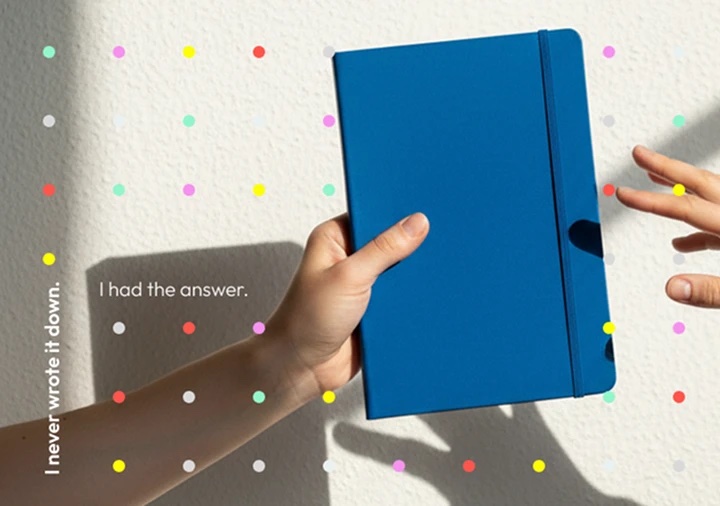
I had the answer.
I just never wrote it down.
I’ve been at this whole image generation game a while now. Early on, it was obvious when something was wrong. Mutated hands, hair growing out people’s mouths. You didn’t need a trained eye, it’s not human, so it’s definitely AI.
Then the image generators got better. Remarkably better. perfect prompt engineering didn’t matter that much anymore. AI interpreted what you said, and gave you something decent back.
But there’s still major issues, and they’re not that obvious anymore.
So what are they?
Most of my work now is building sets of AI images for brands. Not one picture, several, meant to sit together and tell one story.
There’s a difference between a series of images that match, and a series of images that belong together. Consistency isn’t coherence. Same colours doesn’t mean same story.
I’ve been seeing this pop up in brands, whether they use AI or not. And this week I found the same problem sitting in my own process.
I’ve been building an actual system behind generating series of images that tells a story, the technical side, you know, the part that decides lighting, camera angle, what a character is wearing scene to scene. It’s genuinely airtight, imo. It’s almost just like, press, out comes a series of images. And every rule is written down. Nothing drifts. (unless an LLM hallucinates, but that’s getting fixed with Agent automation)
But then I went looking for the part that decides who this person, or character in the images is. Not the technical lock, the actual person. Where do they live? What do they think about? Worry about? What do they actually own, actually do, actually wear?
It wasn’t there.
Not missing exactly. More like, that thinking definitely happens, every time, correctly, and it’s never once been written down. The instruction on the workflow just says “you reason this out.” That’s it. That’s the whole instruction for the part that matters the most.
I think that’s the same thing I keep pointing at, just one layer up. The lighting rules get written down because I have to double-check them. The part where I decide who someone actually is, I’ve never written down, because when I’m doing it, it doesn’t feel like a decision. It just feels like knowing.
Here’s what made it obvious for me. Buried in an old test file, there’s a sentence about a fictional coffee brand’s customer: she walks or takes a minibus taxi, no car assumed, for her income tier. Nobody asked that as a question. It just came out of somewhere, correctly, and got typed in like a fact instead of a decision.
But that’s the stuff underneath it all that actually matters. Not the lighting rules. The part where you decide, correctly, without knowing you are actually deciding something right now.
I don’t know yet if that part can be taught. Whether someone else could sit down with my process, and land on the same character, or whether it only works because it’s been in my head this whole time. That’s not a rhetorical question. I’m actually going to test it.
Because if it only works because it’s in my head, I haven’t built a system. I’ve just gotten very good at hiding that it all hinges on my thinking.
For now I’ve at least written down the questions I was asking without knowing I was asking them. There will be many more. Where do they live. What do they think about. What motivates them. How does that show up in the actual photo?
And why this image, and not that one?
Same question I keep coming back to.
Turns out it goes deeper than I thought.